2025 Joint Ministerial Council convenes in Whitehall
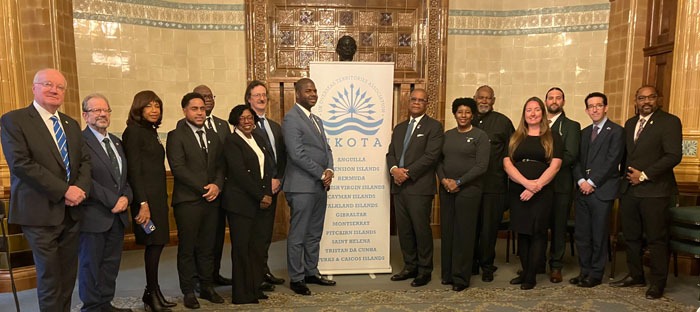
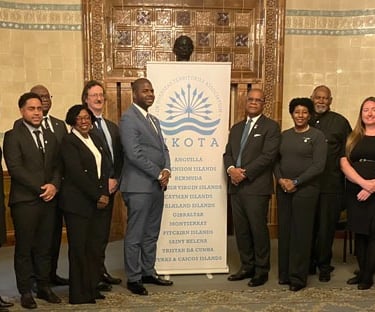
The 2025 Joint Ministerial Council between the United Kingdom and its Overseas Territories has reaffirmed the government’s commitment to the Overseas Territories, but this year’s meeting in London took on added urgency as both sides pressed hard on transparency, environmental stewardship, economic resilience and security.
NEWS FROM THE OVERSEAS TERRITORIESBERMUDABRITISH VIRGIN ISLANDSPITCAIRN ISLANDSGIBRALTARMONTSERRATCAYMAN ISLANDSANGUILLATURKS & CAICOS ISLANDSST HELENAFALKLAND ISLANDSASCENSIONTRISTAN DA CUNHA
The 2025 Joint Ministerial Council between the United Kingdom and its Overseas Territories has reaffirmed the government’s commitment to the Overseas Territories, but this year’s meeting in London took on added urgency as both sides pressed hard on transparency, environmental stewardship, economic resilience and security.
In the formal communiqué released after four days of negotiations, ministers and territory leaders declared that the Council, convened this November under the banner “Protect, Grow, Sustain”, represented a renewal of “a partnership built on mutual respect and shared responsibility… with a shared ambition to deliver real-world impact for our communities.”
For many territory leaders the JMC remains an important stage to raise concerns and recommendations at the heart of Whitehall. As Premier Wheatley of the Virgin Islands put it: “The JMC remains an invaluable opportunity for Overseas Territories to speak candidly and constructively about the challenges we face. Whether we are navigating the increasing threat of climate change, working to fortify financial management systems, or seeking equitable treatment within the UK–OT partnership, our shared experiences strengthen our resolve.”
From the government’s side, the call appeared unequivocal when Stephen Doughty, the UK’s Minister for Overseas Territories, opened the Council: the United Kingdom would defend each territory’s sovereignty and “first call on the UK’s aid budget” remains open for those that cannot be financially self-sufficient. Among the most concrete new pledges is a fresh environmental commitment. The Council launched a comprehensive biodiversity strategy for the Overseas Territories, signalling stronger support for marine protection and ecological resilience at a moment when these habitats face growing pressures.
At the same time the communiqué stressed good governance and financial transparency, including progress, albeit uneven, on establishing publicly accessible registers of beneficial ownership. Some territories, like St Helena, already announced a register, while others committed to technical discussions aimed at balancing privacy with transparency.
The 2025 JMC demonstrated that the UK–Overseas Territories partnership is evolving beyond rhetoric into tangible commitments. The launch of a biodiversity strategy marks a significant step in safeguarding fragile ecosystems, while renewed pledges on sovereignty and aid reinforce the UK’s role as a guarantor of resilience. Progress on beneficial ownership registers, though uneven, reflects a shared determination to strengthen governance and transparency.
Importantly, the communiqué closed with reference to the British Indian Ocean Territory and the Chagos Islands, underscoring that even the most complex and contested issues remain part of the UK-OT dialogue. By acknowledging the Chagos Islands, it shows that the Overseas Territories are all too weary of the UK government and its betrayal of self-determination, and vice versa.
Friends of the British Overseas Territories, Registered Charity No 1156763
Friends of the British Overseas Territories is an independent and politically neutral charity. We do not support or endorse any political party or candidate. Only authorised spokespersons may make statements on behalf of the charity, via the charity’s official communications channels. All views otherwise expressed by members or officers should be considered their own.
A Charitable Incorporated Organisation, Registered in England and Wales Email: enquiries@fotbot.org
You can write to us at: Friends of the British Overseas Territories, Po Box 2635, Ilford, IG1 8UA
Promoting, Supporting and Increasing Awareness of the UK Overseas Territories