Overseas Territories represented at UN Economic Commission
On April 15, 2026, the United Nations Economic Commission for Latin America and the Caribbean (ECLAC) convened the annual Forum of the Countries of Latin America and the Caribbean on Sustainable Development in Santiago, Chile.
NEWS FROM THE OVERSEAS TERRITORIESBRITISH VIRGIN ISLANDSBERMUDARESEARCHTURKS & CAICOS ISLANDSMONTSERRATCAYMAN ISLANDS
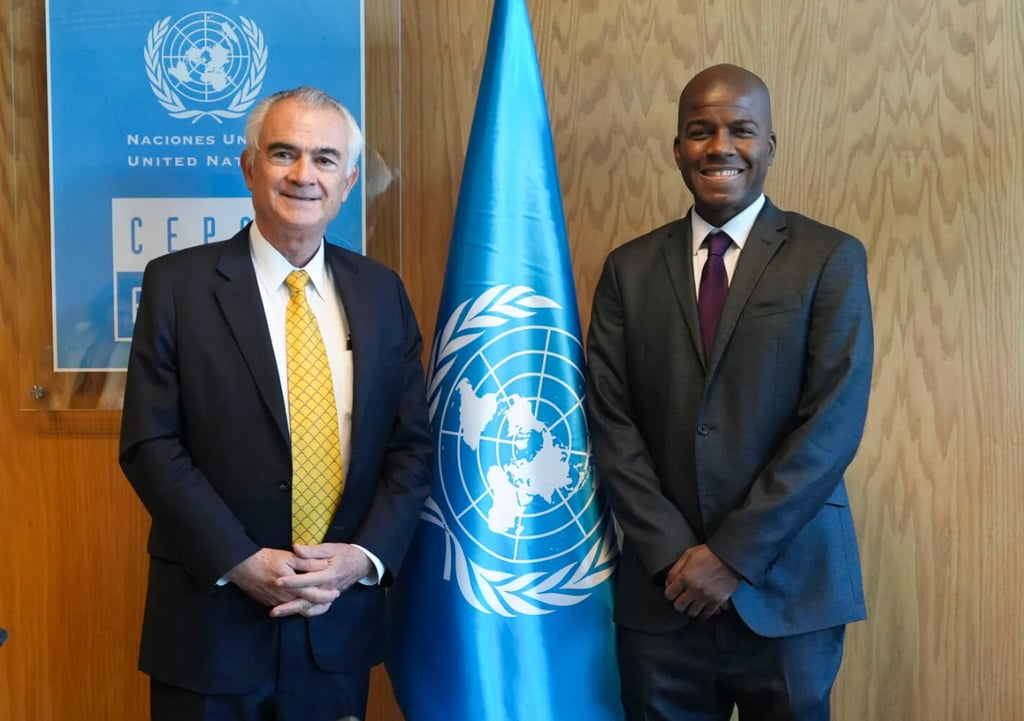
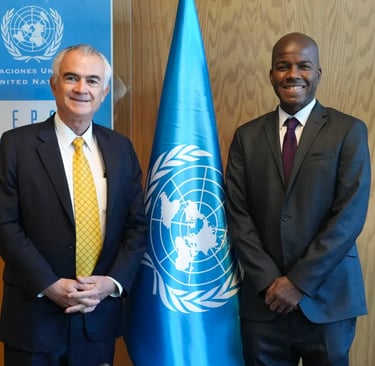
On April 15, 2026, the United Nations Economic Commission for Latin America and the Caribbean (ECLAC) convened the annual Forum of the Countries of Latin America and the Caribbean on Sustainable Development in Santiago, Chile.
The Forum was chaired by Mr. Benito Wheatley, Special Envoy of the Premier of the British Virgin Islands, and featured addresses by different UN bodies, including the UN Industrial Development Organization (UNIDO) and UN Women. The Forum aims to produce high level engagement on how best to achieve the UN’s Sustainable Development Goals.
In his concluding remarks, Mr. Wheatley emphasized the need for increased cooperation between Latin America and the Caribbean in issues of development, highlighting the problem posed by the language barrier in effective negotiations between Latin American and Caribbean countries.
Mr. Wheatley’s remarks speak to a broader issue with overseas territories too. Despite similar histories and governance structures, little to no ‘joined-up governance’ exists between the global network of overseas territories.
In total, roughly 7 million people live across British, French, Dutch, Danish, and American overseas territories globally. The key role played by the BVI in the UN ECLAC forum raises a larger question—what place should overseas territories occupy in the international system generally, and how can governance and inter-territory diplomacy be modernised to facilitate this?
No doubt the presence of the BVI at ECLAC is a step in the right direction, but it also raises the question of where the other overseas territories are. This concern becomes more grave when examining the Caribbean Development Portal on the ECLAC website, which displays outdated data for some of Britain’s Caribbean territories.
The position of overseas territories in the international system is tricky, and only through developing their diplomatic capabilities and domestic governance structures can they be effectively accounted for. Nonetheless, the UK’s commitment to a ‘modern partnership’ with its overseas territories gives good reason to be optimistic about the future of overseas governance and the diplomatic relation between the territories and Whitehall.
The question then must be how this ‘modern partnership’ approach to governance may be applied to international institutions like ECLAC when dealing with overseas territories, British and otherwise.
Friends of the British Overseas Territories, Registered Charity No 1156763
Friends of the British Overseas Territories is an independent and politically neutral charity. We do not support or endorse any political party or candidate. Only authorised spokespersons may make statements on behalf of the charity, via the charity’s official communications channels. All views otherwise expressed by members or officers should be considered their own.
A Charitable Incorporated Organisation, Registered in England and Wales Email: enquiries@fotbot.org
You can write to us at: Friends of the British Overseas Territories, Po Box 2635, Ilford, IG1 8UA
Promoting, Supporting and Increasing Awareness of the UK Overseas Territories