Rebuilding Chagos: A focus on resettlement, rights and reconciliation
BRITISH INDIAN OCEAN TERRITORYNEWS FROM THE OVERSEAS TERRITORIESRESEARCH
After decades of displacement, legal struggle, and contested sovereignty, the Chagossian people are in dire need of an effective solution which respects their dignity.
Pascalina Nellan, a UK-based advocate for the Chagossian people, believes that a rights-centric approach to the Chagos Archipelago is needed. “For decades, the debate about the future of the Chagos Archipelago has been framed as a stark choice: conservation or return, environmental protection, or justice. That is a false choice. A rights-centric resettlement is a model of return that is built not around what states find convenient, but around what the Chagossians are entitled to as a people. The lack of recognition of the people of Chagossians as an indigenous population also led to the consistent denial of characterisations that are important for the indigenous people,” she deplores.
Pascalina Nellan analyses the Chagossian people's desire for recognition and their right to self-determination. She also assesses how the land of their ancestors can still be developed under British protection and in collaboration with the Chagossian people, provided they are given the opportunity to make that choice. Following the UK-Mauritius treaty signed in May 2025, the UK agreed to transfer sovereignty to Mauritius while granting a long lease of Diego Garcia to the UK/US base. However, since the ratification process is still delayed, she remains hopeful that the Chagossians will eventually have the opportunity to decide their future.
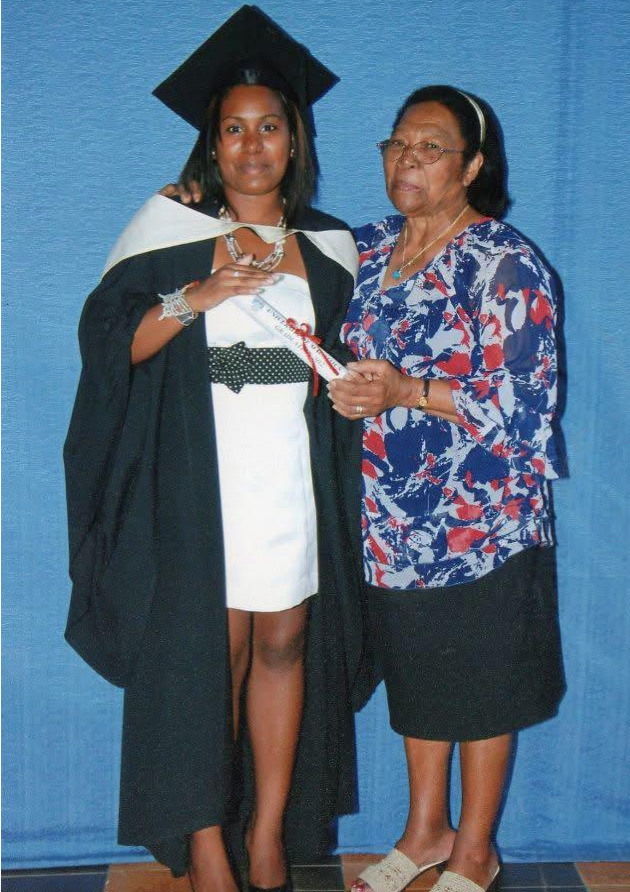
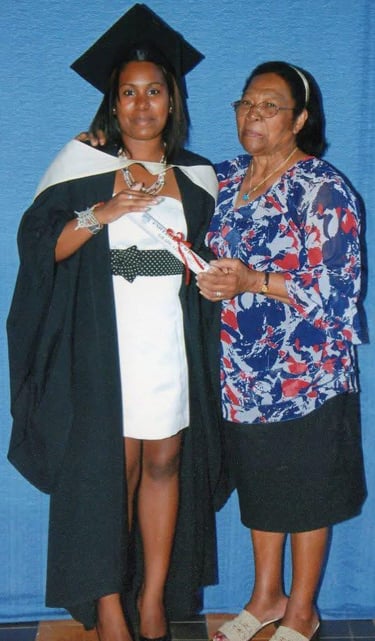
(Above) Pascalina Nellan and her grandmother, Lucile Uranie, a native of Diego Garcia
Chagossians as Indigenous People
The debates about sovereignty, return, and justice are rooted in something deeper: the Chagossians’ identity as a distinct people. Their fight for resettlement and participation cannot be separated from their Indigenous status. Over time, courts and humanrights bodies have recognised them as belongers of the Chagos Islands and as an Indigenous population. were cited as the “belongers” of the Chagos Islands in a High Court judgement of 2000 ( R (Bancoult) v Secretary of State for Foreign and Commonwealth Affairs (No 1) [2000] EWHC Admin 413.). “In that case, Lord Justice Otton accepted that Chagossians were not merely Mauritian nationals or British nationals but “belongers” of the Chagos Islands, with an inherent right of abode there. This illustrates their legal status as a distinct community”, Pascalina Nellan explains.
A United Nations report from 2021 refers to the Chagossians as "the indigenous inhabitants of the islands."(United Nations, 2021). This recognition was also used by Human Rights Watch in its 2023 report. The organisation noted, "That's when the nightmare started." In its written evidence to the UK Parliament for the 2024-2025 session, Human Rights Watch explicitly stated that the UK "forced an entire Indigenous people, the Chagossians, from their homes." (UK Parliament, 2024) (Human Rights Watch, 2024)
According to widely accepted criteria used in UN practice and international law, Chagossians have their own ethnicity, language, history linked to the islands, and a defined territory. Together with UN General Assembly Resolution 1514 and Article 1 of the UN Charter, this supports their claim to the right to self-determination.
Self-determination: A call from the Chagossian community for a fairer path forward
Across the diaspora, there is a strong desire to be involved in all future decision-making processes concerning the archipelago. This stance is supported by the UN Committee on the Elimination of Racial Discrimination (CERD), which has stressed that any arrangements concerning the Chagos Archipelago must ensure the participation of the Chagossian people. “Self-determination does not necessarily imply independence or association with a state. It means that people, particularly indigenous or displaced people, must be empowered to shape their political, social, economic, and cultural futures. So, why don’t Mauritius and the UK allow the Chagossian natives and their descendants to decide for themselves?”, questions Pascalina Nellan.
The International Court of Justice’s 2019 Advisory Opinion and the United Nations General Assembly’s 2019 resolution situate the Chagos question within the incomplete decolonisation of Mauritius, imposing on the United Kingdom an obligation to bring its administration to an end “as rapidly as possible.” This legal architecture points toward decolonisation under Mauritian sovereignty. However, the Chagossian people, those most affected, are claiming a Chagossian-centred self-determination process. They wish to have a say in decisions about their homeland.
In December 2025, UN CERD called on the UK and Mauritian Governments to suspend the ongoing and uphold their obligations under international human rights treaties. UN CERD makes it clear that the rights of return and self-determination cannot be fully realised without the meaningful participation of Chagossians in resettlement planning and territorial governance. (OHCHR, 2025)
The landing of four Chagossians, led by Misley Mandarin, on Île du Coin on February 16, one of the archipelago's islands, reignites the Chagossians' claim to the island as its rightful owners. The group has declared its decision to "return home" and establish a permanent settlement. These actions make two important points clear: the Chagossian people are seeking a fresh start in the Chagos Archipelago and are firmly asserting their right to self-determination.
The testimony of Liseby Elyse at the International Court of Justice
On September 3, 2018, the video testimony of Liseby Elyse, a Chagossian who was forcibly removed from the islands in the late 1960s, was presented before the International Court of Justice (ICJ) during the 2018–2019 advisory proceedings.
The inclusion adds a rare human dimension to proceedings otherwise dominated by legal argument. “But a single testimony cannot substitute for meaningful representation of a diverse and dispersed community. Her narrative was personal and does not reflect the experiences of other Chagossians, masking the variety of perspectives within the community,” she explains.
One testimony can't represent everyone's experience, a collective input should be allowed to capture the varied experiences, feelings and expectations of the whole community. “The ICJ doesn't allow non-state actors, like indigenous communities, to present their own cases. They have to depend on states to make their claims for them. This process often limits their voices and perspectives, as they can be influenced by the state's interests. In the situation with the Chagossians, their requests for return and restitution were often overshadowed by the state’s authority.”
The desire for collective representation was made clear in October 2022. Representatives from several Chagossians organisations, including Chagos Refugees Group (CRG), Chagossian Voices (CV), and Chagos Asylum People came together during a two-day international conference on the Status of the Chagos Islands hosted by the Institute for Pan-African Thought and Conversation at the University of Johannesburg. During this conference, they jointly adopted the Pretoria Declaration (Chagossian Voices, 2022). This collective action aimed to assert their status as an Indigenous people and to affirm their inalienable right to self-determination independent of any state influence, reflects a stronger democratic mechanism.
Thus, moving forward, it is crucial that the Chagossian diaspora's calls for meaningful participation are acknowledged and that the UN CERD's recommendation is followed. No future arrangement shall be considered legitimate without the free, prior, and informed consent of the entire community. The lived experiences of Chagossians cannot be reduced to a single narrative. The right to selfdetermination necessarily requires that all Chagossian natives and descendants be afforded a voice in shaping the future of their homeland.
Resettlement
Many Chagossians wish to initiate the resettlement process in the Chagos Islands while maintaining their identity as a British Indian Ocean Territory (BIOT). This is seen as a crucial step towards addressing historical injustices and aligns with the self-determination goals expressed by the Chagossian people. Pascalina Nellan believes that a resettlement under British Protection will facilitate sustainable development.
“A resettlement under British protection, carefully designed, phased and environmentally rigorous, can demonstrate that ecological stewardship and the rights of the Chagossian people are not competing principles but mutually reinforcing responsibilities”, she explains. She bets on the UK’s experience in supporting remote territories such as the Falkland Islands and St Helena. “Similar infrastructure support renewable energy systems, climate-resilient housing, telemedicine links, digital education platforms and maritime enforcement assistance could underpin a sustainable pilot settlement in Chagos. Such infrastructure would remain fully compatible with defence requirements on Diego Garcia while enabling civilian life on outer islands”, she analyses.
In April 2010, the UK established the Chagos Marine Protected Area (MPA). It covers 640,000 km² of ocean, an area larger than France. “The United Kingdom already maintains one of the world’s largest marine protected areas in the archipelago. Protecting this unique ecosystem is not optional; it is essential. But environmental protection must not remain frozen in an outdated model of exclusion. Around the world, conservation has evolved beyond fortress-style reserves that remove indigenous peoples from their territories. The most durable marine protection systems today are co-managed, science-led and community-anchored,” Pascalina Nellan points out.
Pascalina Nellan advocates for environmental modernisation. She believes that future decisions on the future of the Chagos Archipelago should integrate ecological science, social justice, and Indigenous expertise. “A co-governed, zoned Marine Protected Area would reflect contemporary international law and conservation science. A phased pilot settlement would reduce risk and build empirical evidence. Structured UK institutional support would ensure stability”.
Pascalina Nellan believes that sustainable resettlement and environmental conservation can be effectively managed through collective efforts. “Under international standards reflected in the Convention on Biological Diversity and the rights-based conservation principles advanced by the International Union for Conservation of Nature, indigenous stewardship is recognised as an environmental strength, not a liability. Chagossians possess generational knowledge of reefs, lagoons and seasonal marine cycles. Their presence would enhance monitoring, deter illegal fishing and embed conservation into everyday governance”, she insists.
As the UK reconsiders its future relationship with the Chagos Archipelago, it has the opportunity to align its commitment to human rights and to play a fundamental role in safeguarding the ecosystem. “Chagossians are not seeking to dismantle conservation. They are asking to participate in shaping it. In an era where indigenous rights and environmental governance are increasingly intertwined, the Chagos Archipelago offers an opportunity to demonstrate that historical redress and ecological integrity can advance together under British protection, with shared responsibility and shared stewardship”, she analyses.
Designing return: feasibility, sustainability, and justice for the Chagossian people
The KPMG feasibility report outlines phased resettlement options and indicates that resettlement can be successfully achieved through careful planning. “A responsible approach would begin with a small pilot settlement of voluntary returnees on the outer islands. Modular housing, renewable micro-grids, desalination systems and strict waste controls would minimise the environmental footprint. Baseline ecological monitoring, conducted before and during occupation, would provide transparent data on sustainability”, Pascalina Nellan explains.
Pascalina Nellan advocates for a meticulously planned pilot settlement. She supports low-impact infrastructure and thorough monitoring. For her, it is essential to make resettlement both feasible and environmentally responsible. “Expansion would occur only if environmental and economic benchmarks are met. Regulated artisanal fisheries, tightly controlled eco-tourism and community-led stewardship would develop gradually. This is adaptive governance, cautious, evidence-based and reversible if required”, she recommends.
The environmental assessments of Ile du Coin (Peros Banhos atoll) and Ile Boddam (Salomon atoll), the economic models for fisheries and tourism, and the multi-site infrastructure analyses collectively indicate that resettlement is technically feasible, potentially sustainable and can be designed to be compatible with defence requirements on Diego Garcia.
She suggests that the Marine Protected Area transitioned from a rigid “no-take” regime to a zoned, co-managed framework: “Core biodiversity areas can remain strictly protected. At the same time, small-scale, sustainable artisanal fishing regulated by science-based catch limits and clear licensing systems should be permitted for Chagossians. This is not deregulation; it is modern conservation governance.”
For this cohabitation to succeed, it would become crucial to implement new legislation: “Environmental compliance should include statutory Chagossian representation on marine management boards, joint decision-making on zoning and licensing, and full access to environmental data. Conservation must be strengthened through Chagossian presence, not maintained through exclusion”.
The human rights advocate points out that the Joint Nature Conservation Committee and the Centre for Environment, Fisheries and Aquaculture Science are the scientific institutions in the UK that can offer technical expertise and monitoring capability. However, she emphasises the importance of giving Chagossians a formal role in selecting, reviewing, and collaborating with environmental organisations working in the territory. “Trust cannot be imposed; it must be built through participation, transparency and shared authority”, she claims.
Self-determination: a pathway to justice for the Chagossian people
Instead of giving away the Chagos Archipelago, the UK could initiate the process of self-determination for the British Indian Ocean Territory. Surprisingly, this approach could retain sovereignty while also addressing a historical wrong by helping to rebuild the Chagossian community on the archipelago and guiding it through a phased settlement plan.
Currently, the main obstacle to the Chagossian resettlement in the archipelago is the structural governance choices. Mauritius and the UK continue to deny the Chagossian identity and their right to have a say in their future”, acknowledges Pascalina Nellan.
It is clear the Chagossian people share two important claims, the right to self-determination that the Chagossian representatives agreed upon the Pretoria Declaration and the right of return.
By initiating the process of self-determination for the British Indian Ocean Territory, the Uk could win the trust of the Chagossian people. On this right-led pathway, it could address a historical wrong while helping to rebuild the Chagossian community on the archipelago and guiding it through a science-led phased resettlement planning.
Focus on Pascalina Nellan: A fight for justice rooted on her Chagossian heritage
Heritage is at the heart of Pascalina Nellan’s commitment to justice. Her activism is rooted in the lived story of her grandfather, Michel Sagaï, a native of Peros Banhos, and her grandmother, Lucile Uranie, born on Diego Garcia.
As an independent advocate, the Chagossian descendant, is dedicated to ensuring that Chagossians are included and visible in discussions about sovereignty negotiations between the UK and Mauritius. At 35, she also works to engage with United Nations human rights mechanisms to amplify the voices of her people on the international stage.
During the past years as a former member of the Chagossian Voices, she has been very active in campaigning for the nationality and borders bill that grants British citizenship to Chagossian descendants, advocating for legal recognition and inclusion within the UK. She has also worked with the Chagos Refugees Group. “I have been involved in advocacy on Chagossian rights, including the right to return, recognition, and restitution for the displacement of my people from the Chagos Archipelago. I have contributed to community campaigns, statements, and events that bring global attention to the ongoing injustices experienced by Chagossians due to forced exile under British and United States policies”, she details.
She participated in various interventions across multiple United Nations mechanisms, including the Expert Mechanism on the Rights of Indigenous Peoples (EMRIP), the Universal Periodic Review (UPR), and UN committees addressing discrimination. Her efforts focused on advocating for the rights of the Chagossian people and addressing broader human rights issues.
Driven by her pursuit of justice for the exiled Chagossians, Pascalina Nellan has tailored her educational journey to enable her to focus much of her work on this cause. “The advocacy for Chagossian rights is not simply a legal or political struggle. It is a deeply personal fight for identity, dignity, and intergenerational justice. It is also a profound struggle for ancestral rights, honouring the connection of Chagossian families to their land and heritage”, she proudly declares. Too deepen her expertise, she pursued a Master’s degree in International Human Rights Law after completing a bachelor's degree in Political Science with a specialisation in International Relations.
“I completed an internship at Speak Human Rights in Mauritius, where I gained practical experience in human rights advocacy and research. I have collaborated with organisations such as Human Rights Watch and Amnesty International UK through community advocacy and awareness-raising activities related to Chagossian rights, amplifying the voices of displaced Chagossians in international forums and human rights discourse”, she shares.
For many Chagossians, the loss of their home is not just a historical fact. It is a wound carried quietly through generations. Stories are shared at family gatherings, memories are passed down, and there remains an unwavering desire to return to the place from which they were abruptly uprooted.
Pascalina asserts forcefully that: “The displacement of the Chagossian people represents a historical wrong that has ripple effects across families and communities today. True justice means centring the lived experiences of Chagossians themselves, not just in legal texts or diplomatic agreements, but in how we shape policies that affect our connection to land, culture, and future generations”.
Pascalina Nellan has collaborated with Dr Jonathan R. Kasstan and other researchers to document and revitalise Chagossian Creole, the heritage language of the Chagossian people. “This work includes co-authoring academic publications on Chagossian Creole, its intergenerational transmission, and the cultural importance of language preservation in diaspora communities. This collaboration demonstrates my active engagement in both academic and community-driven efforts to safeguard Chagossian linguistic heritage”.
Her commitment to her community is centred on ensuring that the voices of Chagossian families are heard. This includes the perspectives of elders who remember life on the islands, as well as younger generations who are shaping their identities in the diaspora. “Their experiences must remain at the core of global discussions about rights, restitution, and the right to return”, she concludes. Pascalina Nellan represents the new generation of Chagossians. A generation that does not want to be silenced. Educated and organised, it wants to step up and fight for a just and inclusive return.
Friends of the British Overseas Territories, Registered Charity No 1156763
Friends of the British Overseas Territories is an independent and politically neutral charity. We do not support or endorse any political party or candidate. Only authorised spokespersons may make statements on behalf of the charity, via the charity’s official communications channels. All views otherwise expressed by members or officers should be considered their own.
A Charitable Incorporated Organisation, Registered in England and Wales Email: enquiries@fotbot.org
You can write to us at: Friends of the British Overseas Territories, Po Box 2635, Ilford, IG1 8UA
Promoting, Supporting and Increasing Awareness of the UK Overseas Territories